Side by Side: Insights From a Care Partner
Contributor: Andrea Rudy
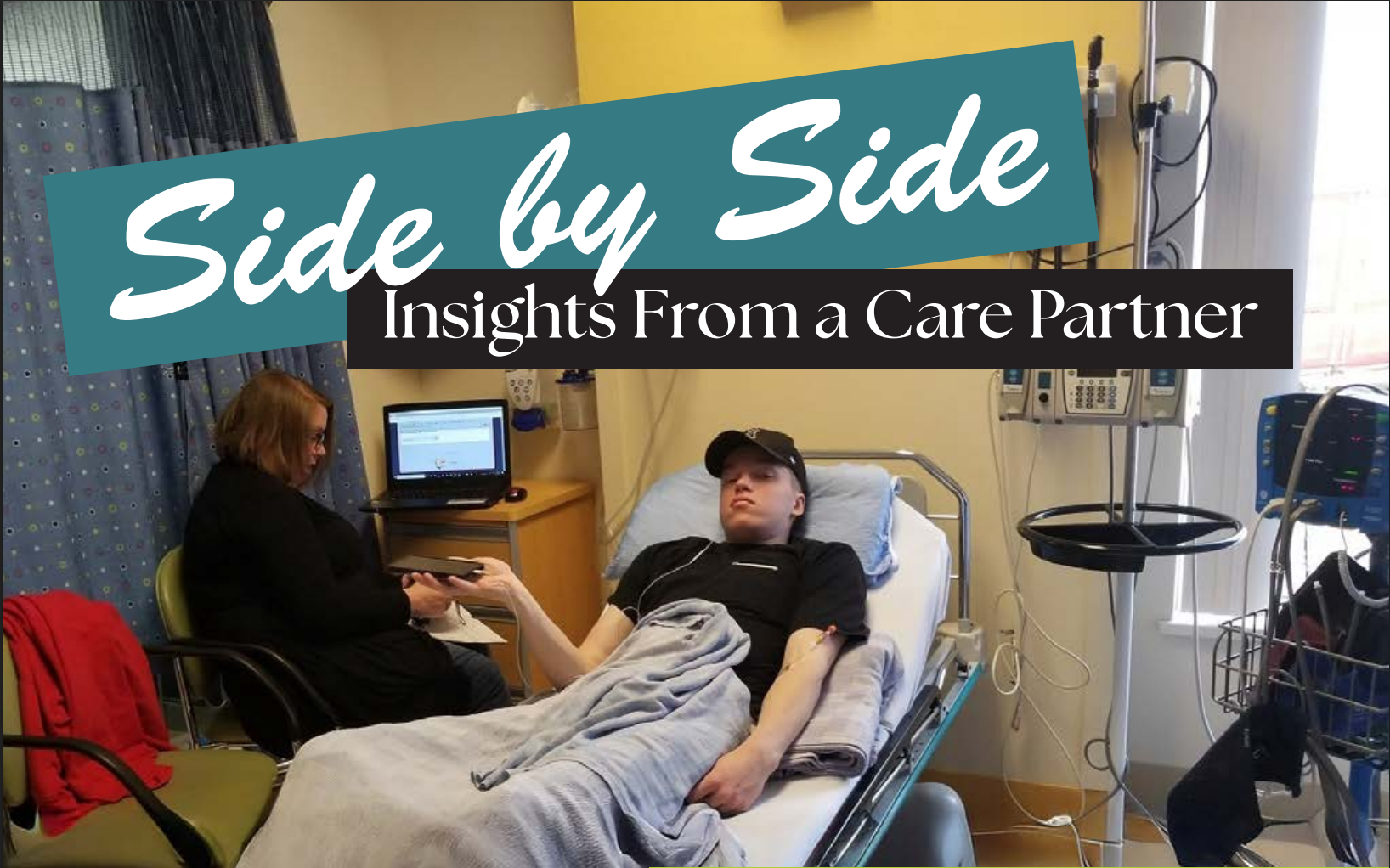
Behind every kidney patient is often a quiet hero, or an entire family, sharing the weight of appointments, lifestyle changes, and the daily ups and downs of chronic illness. Their stories rarely take the spotlight, yet they reveal the heart of what it means to walk alongside someone through treatment. Listening to care partners in their own words offers a deeper understanding of what kidney care truly looks like beyond the clinic walls.
In 2016, Susan and Keith Firman’s son, Ryan, was diagnosed with kidney disease at the young age of 16. In that moment, life changed for the entire family. Typical parental worries about school grades and team tryouts for Ryan and his younger brother, Adam, changed to lab results, medications, and monthly trips from Kamloops to BC Children’s Hospital in Vancouver. And for the past nine years, his family has been by his side sharing in the journey.
In early 2025, Ryan received an urgent call necessitating immediate dialysis treatment, and shortly after, the news that his best chance was a kidney transplant from a living donor. That summer, Ryan, his parents Susan and Keith, and his brother Adan travelled from their home in Kamloops to Vancouver where he received that live-saving transplant after an exhaustive search for a donor.
KM: Susan, thank you so much for speaking with us today. Can you tell us what this experience has been like for you, both as a mother and a care partner? Before Ryan’s diagnosis, what was life like?
Susan: Ryan had always been an active teen—playing competitive basketball and soccer, and skiing every winter. Between him and Adam plus the demands of our family business, my husband, Keith, and I were constantly on the move. In the weeks before his diagnosis, Ryan had started experiencing heart palpitations, and we’d been in and out of doctors’ offices trying to understand what was going on.
KM: What can you tell us about the day when you first heard of Ryan’s diagnosis and the days after?
Susan: I remember I was standing in Ryan’s bedroom when we received the call. The doctor said, “We have concerns about Ryan’s kidneys. They are only functioning at 25 percent. We need to get you down to BC Children’s Hospital.” In my mind I was thinking, that’s just not possible. I was in shock. Even after hanging up, I still couldn’t process what I heard. To look at Ryan you would have no idea he had kidney disease. He was young, fit, athletic. How could this be happening?
Eventually we ended up at BC Children’s where he had a biopsy, after which we were told that he would need a transplant at some point
KM: How did life change for you from mother to both mother and care partner?
Susan: Life definitely changed. We had to travel from Kamloops to Vancouver once a month, with both Keith and I taking time off work. But we would bring his brother, Adam, and make a family weekend out of it so Ryan wouldn’t feel bad. We tried to make it feel as normal as possible for the whole family.
There were more appointments, more bloodwork—it became clear this was something we had to actively manage. We followed all the advice from the Children’s Hospital, then transitioned his care from Vancouver to Kelowna and eventually to Kamloops as he got older.
We never let it consume our lives. We didn’t want to live in constant fear, saying “we can’t do this” or “we can’t do that.” We took it one step at a time—whether it was six months, six years, or sixty years, we knew it was out of our control. All we could do was make sure Ryan stayed as healthy as possible by eating well and staying active.
KM: We often hear about the connection between kidney disease and mental health. Was this something that concerned you? If so, how did your family approach it, and is there anything, big or small, that stands out in your experience?
Susan: Maintaining a sense of normality was key for us. We kept our daily routines the same and avoided any “poor me” mindset—it was essential for our mental health.
During our visits to BC Children’s Hospital, Ryan saw other kids facing even tougher challenges, and that gave him perspective. He’d say, “If they can deal with that, I can deal with this.” We didn’t want depression to take hold, so our attitude was always, we’ll figure it out.
We also encouraged Ryan’s independence—getting his driver’s license, having some autonomy— because that was important for his confidence and mental wellbeing as a teenager. As his mom, I wanted him to build the life skills every teenager needs. He had his doctor’s contact information in Kamloops and knew he could reach out to her directly if he needed to, without my involvement, but he always knew I was there for him whenever he needed me.
Once he aged out of BC Children’s Hospital, our relationship shifted. We became more of a team, working together instead of me directing everything. Through it all, Ryan has handled everything like a champ. We’ve all had our good and bad days, but his optimism has been our anchor.
KM: There’s so much to manage when living with kidney disease at any age. How does everyone work together to provide ongoing physical, emotional, and practical support?
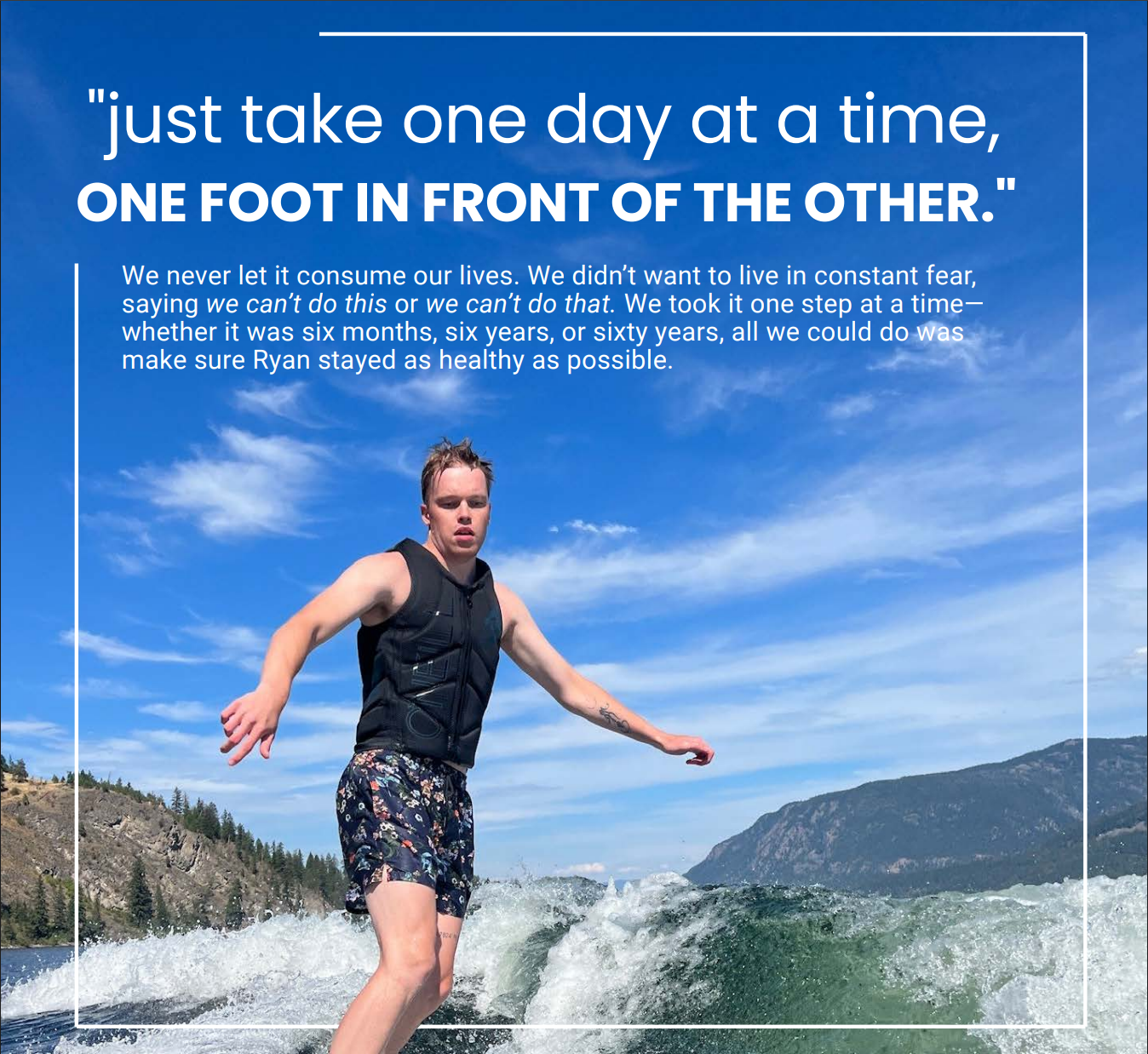
Susan: We just take one day at a time, one foot in front of the other, and we do whatever we can to help him. Whether that’s reminding him to drink X amount of water, make sure he’s taking his medication. I know Ryan is 25 now, but I still can’t help asking him, did you do this, did you do that, what about this, what about that, right?
He stayed active with sports up until the last couple of years when things became more difficult. Maintaining a kidney-friendly diet is also key. My thought has always been, we are going to keep these kidneys as healthy as possible for as long as needed.
At the end of the day, it comes down to this question: Did we do everything we could to keep him healthy? If the answer is yes, then we’ll deal with whatever comes next.
KM: Can you share a time when things felt especially hard? And what got you through it?
Susan: There were times when I wonder if it was my fault. As a mother, we second guess what we could have done differently, if it was something that happened when I was pregnant. Those moments of self-doubt and feeling bad were hard. But I had my own support system.
My husband, Keith, was a huge factor in helping me get through those moments. He gave me a reality check and helped keep my positivity up.
Plus, I had another son to think about. Having your own support system, if it’s a friend or family member to lean on, is crucial.
The day hope became real
KM: This year was a real turning point when you found out Ryan needed a transplant urgently. It was a whole new learning process, but he found a match and has had his transplant.
Susan: I’m so excited for him. I’ve always said this would help him get his life back. He doesn’t have to do dialysis anymore, and now he can just get on to making plans, thinking about the future, and getting back to being a young man and having some fun in his life, right? I think that’s really important for him.
KM: Tell us more about that process. Your family members were tested, but unfortunately no one was a match for Ryan. But there was a living donor out there for him.
Susan: This has absolutely saved his life. Unfortunately, I wasn’t a donor match for him, and neither was my husband. We were both shocked and upset when we discovered that. It is amazing, the gift that he’s been given from an initially anonymous donor. I can’t say thank you enough.
KM: What is your advice to other care partners in a similar situation?
Susan: If you’re helping a loved one search for a living donor, don’t be afraid to share your story. Ryan was hesitant at first, and I gave him the space to sit with those feelings. Don’t push—but be supportive and patient while they process it.
It takes vulnerability to put your story and information out there, but that openness can make all the difference. There truly are good people in the world who want to help. It was hard to believe that in the beginning, but it’s true—it happened for us. Ryan found his donor because we were willing to share.
My biggest piece of advice is: don’t lose hope. There will be low points along the way, but that’s when you pick up the torch and keep going for your loved one. Hope really does carry you through.
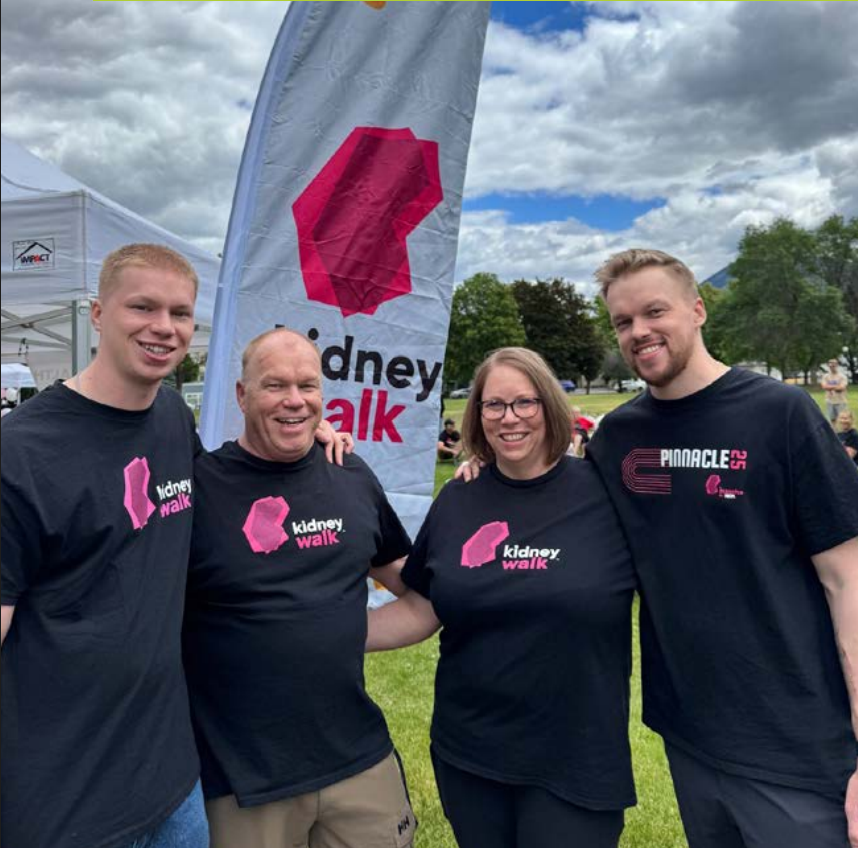
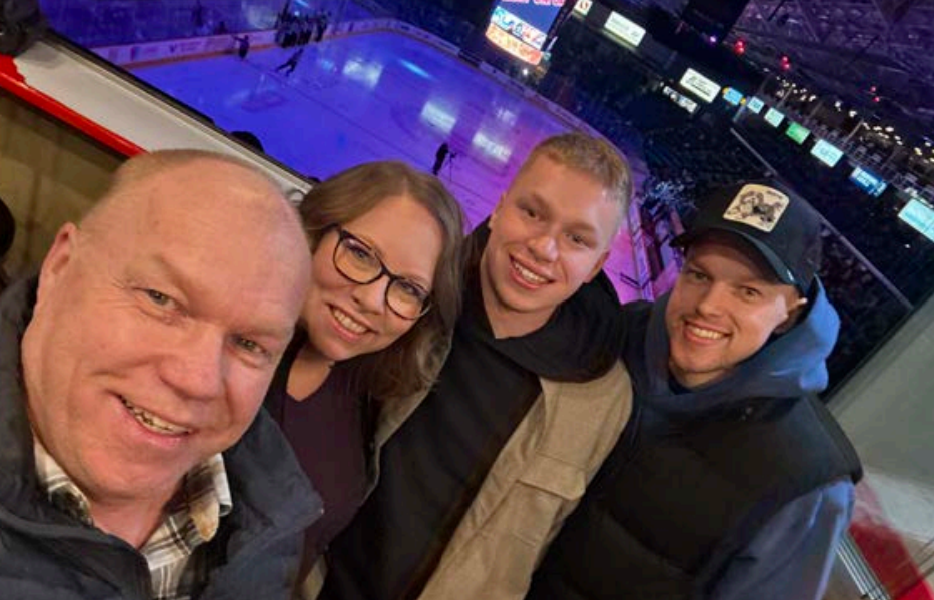
Left to right: Adam, Keith, Susan and Ryan at the June 2025 Kidney Walk
KM: That’s another part of being a care partner that many people may not think about—the advocacy and communications process when needing a transplant.
Susan: Exactly. Even as we’ve passed that stage, we are still going to continue to push the message of being tested and help increase awareness of living donation. When people hear that someone is exploring it, they often ask questions, learn more, and sometimes consider it themselves. It normalizes a conversation that can be lifechanging for others down the road.
KM: We love hearing that you’re keeping the torch burning and continuing the mission of helping other kidney patients find their match. Tell us a bit more about the Facebook page you created for this process.
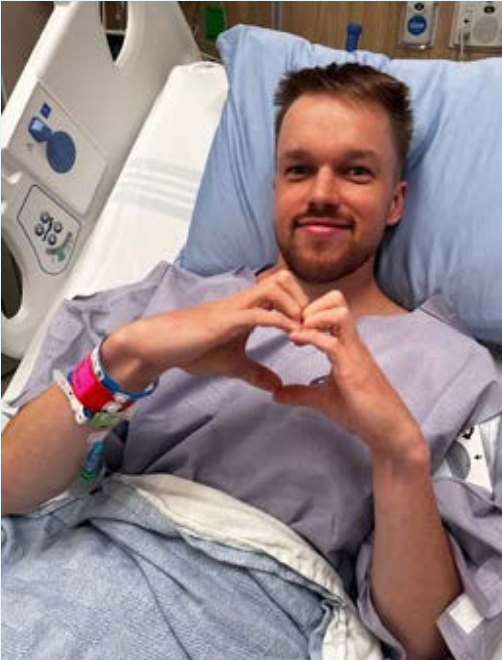
Ryan before surgery, August, 2025
Susan: We created a page to share Ryan’s situation, and other people can also join and post their own situations. We have over 400 members on that page now, so, we’re hoping to continue to spread the word about kidney awareness.
One of the things I thought that was really important to mention is that there were a lot of people who came forward. We were fortunate with Ryan; a lot people were filling out paperwork to try to become a donor. And I would just really highly encourage people to maybe continue with that process.
KM: From sharing your story, as you said, multiple living donors came to the table and said, ‘I want to see if I’m a match’, spreading awareness about living organ donation, which gets the conversation going. People who weren’t a match for Ryan might be a match for someone else.
Susan: Exactly! It can create a domino effect. I think it’s really important to try to continue to do that because one in ten Canadians are affected by kidney disease. So it’s far more common than we think.
KM: What do you want others to know about being a care partner that they might not see from the outside?
Susan: Just do what needs to be done.
There is no one way to do things, and it has to work for you—everyone’s situation is different.
Connecting with others who are at a similar stage in the journey and reaching out are important. Through the Kidney Wellness Hub I found some great peer support groups. On one Zoom call, there were people from all over British Columbia—and even some from the East Coast— all sharing advice and their own experiences. The Foundation was a big help these last couple of years. They offered online classes for finding a donor and support on going through the paperwork.
I would suggest to others in a similar situation to give their loved one the space to feel ready to share. Once you start, you have to be prepared to be vulnerable and get it out there.
Who is Ryan? Why is he going through this? What is his story? When he didn’t have the strength to speak up, I took on that role. We started the Facebook group where we posted every single day. We were an open book, would answer any questions at all times, which was the least we could do for those considering being tested to be an organ match. We posted every single day and 88 days later we had a match.
KM: As Ryan’s mom, you’ve talked about how happy you are that he’s getting a little bit of his life back. For you personally, what does that mean? How do you think life will feel for you, day to day, now that he’s on this new path?
Susan: Yeah, it’s still emotional, to be really honest with you. Because we’ve been going through this for almost ten years now, but we’re on the other side of it now! I'm just super thankful that he had this opportunity—that a living donor came forward to help him.
KM: On a final note, what gives you hope as you and your family move forward?
Susan: Our community. The way friends, neighbours, and even local media stepped up has been incredible. Everyone helped share our story and push the message out there. Our mission became not just about Ryan, but about helping others, too. Even if someone wasn’t a match for him, maybe they could be for someone else. There are over 500 people in BC waiting for a kidney, and every story shared can make a difference.
I can’t just walk away now that Ryan has his new kidney. So many people reached out to help, and we want to honour that by keeping the message alive. Ryan is living a full, healthy life with his new kidney, and that gives us hope and purpose to keep going for others still waiting.
KM: Susan, thank you for speaking with us today. As you point out it takes not only courage but also vulnerability for people to share their story. But in the sharing comes hope.
Susan: Absolutely.
Tips for New Care Partners
Learn about kidney disease. Understanding your loved one’s condition helps you anticipate needs, support treatment decisions, and reduce anxiety.
Communicate openly. Check in often, listen fully, and encourage honest discussions with healthcare providers.
Stay organized. Keep track of medications, appointments, and test results in one place—digital or paper.
Encourage healthy routines. Support balanced meals, regular activity, and rest. Join them in walks or meal planning to make it easier and more positive.
Practice self-care. Take breaks, reach out for support, and look after your own emotional and physical health.
Build a support network. Connect with other care partners or local Kidney Foundation programs to share experiences and learn from others.
This article is republished from the Kidney Magazine.